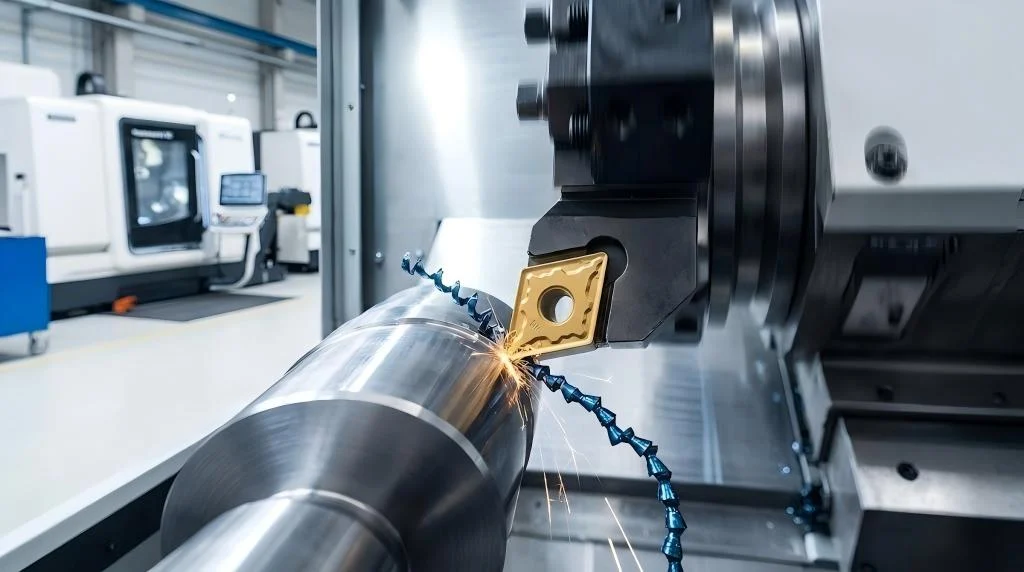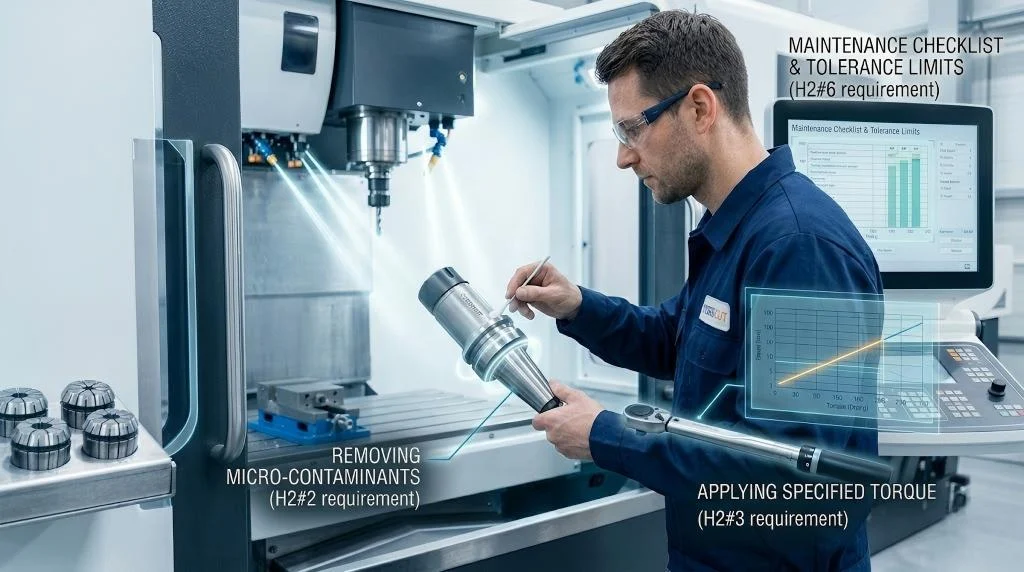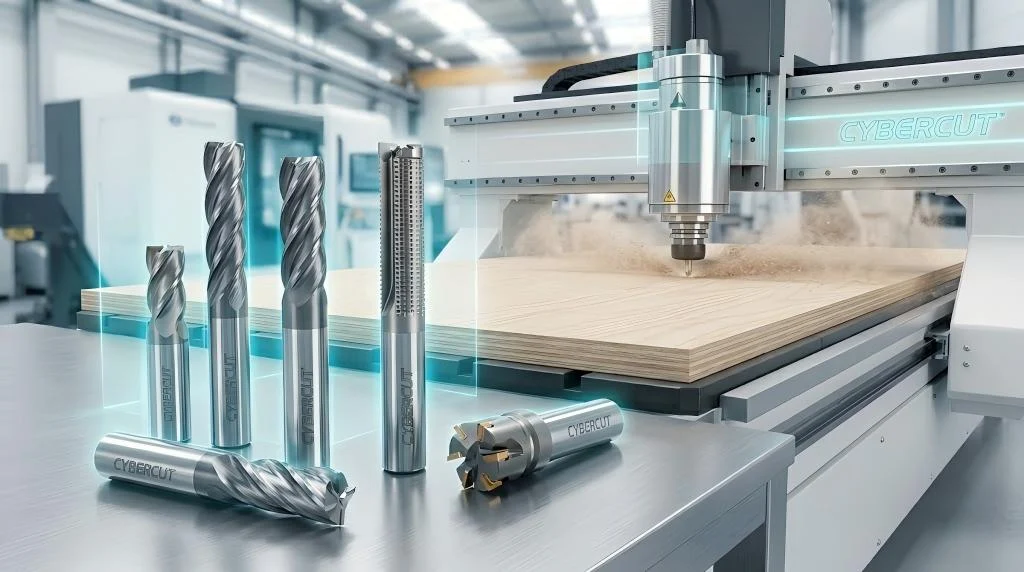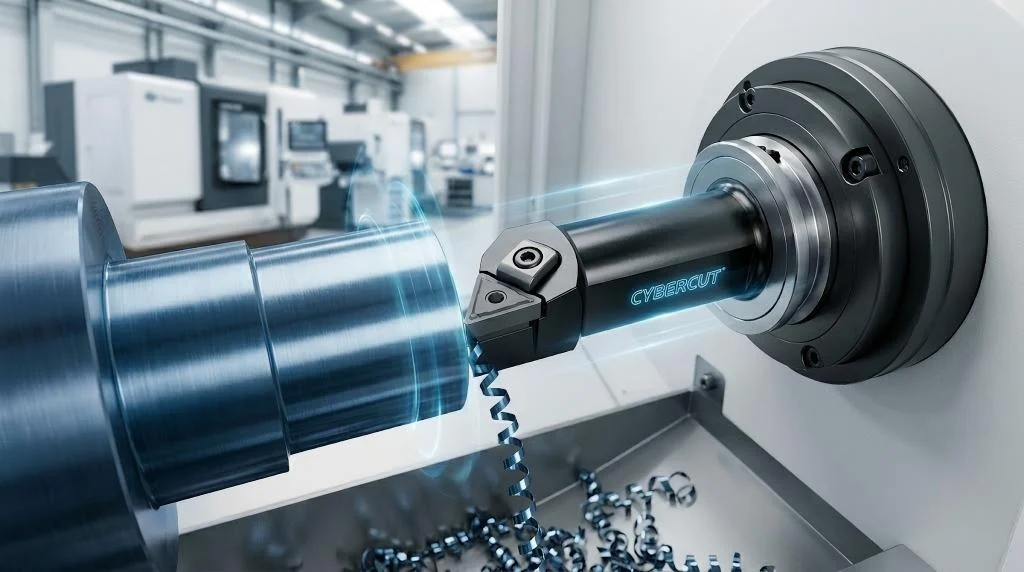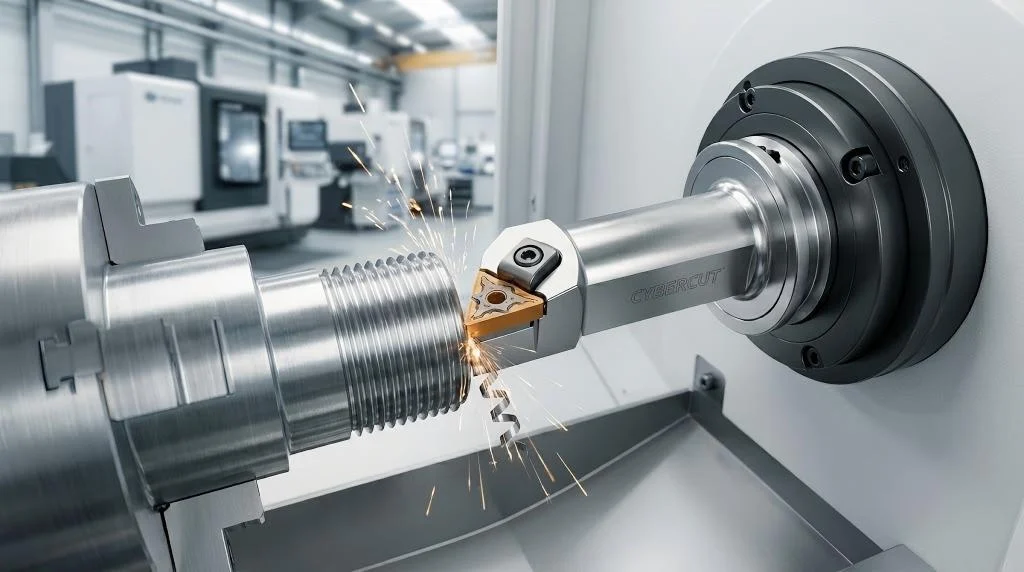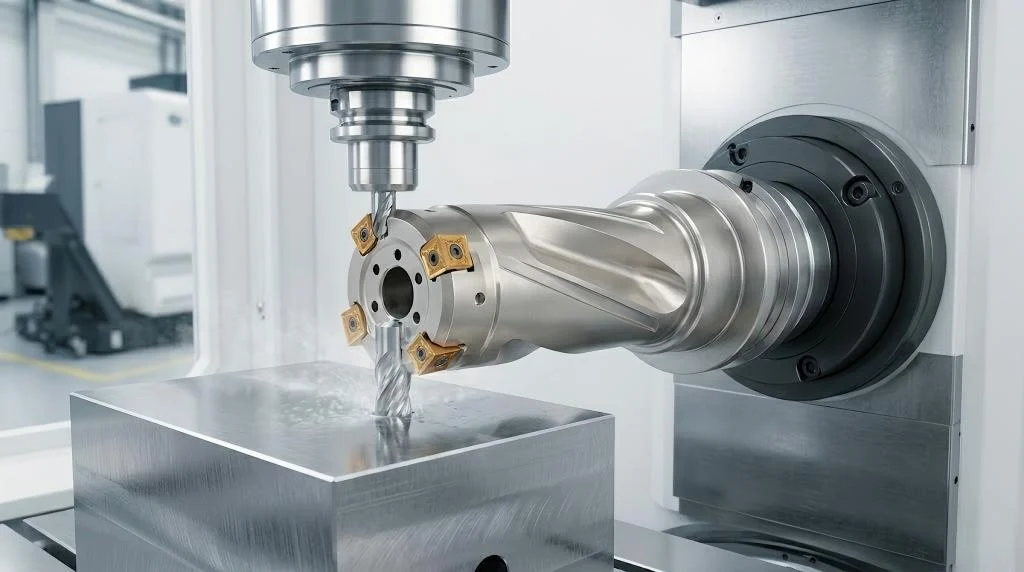
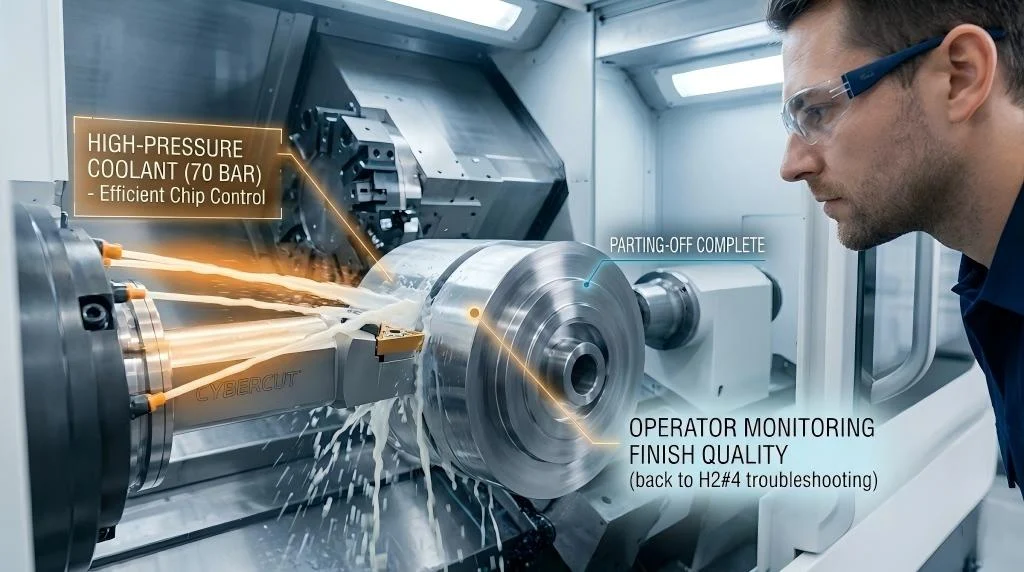
In the discipline of CNC machining, the milling department is often the most capital-intensive area of a production facility. The efficiency of a machining center is entirely bottlenecked by the capability of the cutting tool making contact with the raw material. When setting up a new job or optimizing a high-volume production run, manufacturing engineers consistently face a critical tooling dilemma: should the application utilize indexable milling cutters or solid carbide end mills?
This is not a question of which tool is universally “better,” but rather a strict engineering calculation of machine kinematics, part geometry, required tolerances, and overall machining economics. Making the wrong choice can lead to excessive tool budgets, catastrophic tool deflection, poor surface finishes, and thousands of dollars in wasted spindle time. While evaluating your milling strategies, it is equally critical to assess your lathe department’s efficiency with high-performance CNC turning inserts to ensure a holistic approach to shop floor optimization.
This comprehensive guide systematically deconstructs the structural, financial, and operational differences between indexable milling cutters and solid carbide end mills, providing you with the exact data needed to make the most cost-effective decision for your specific CNC projects.
The Pros and Cons of Using Indexable Milling Cutters

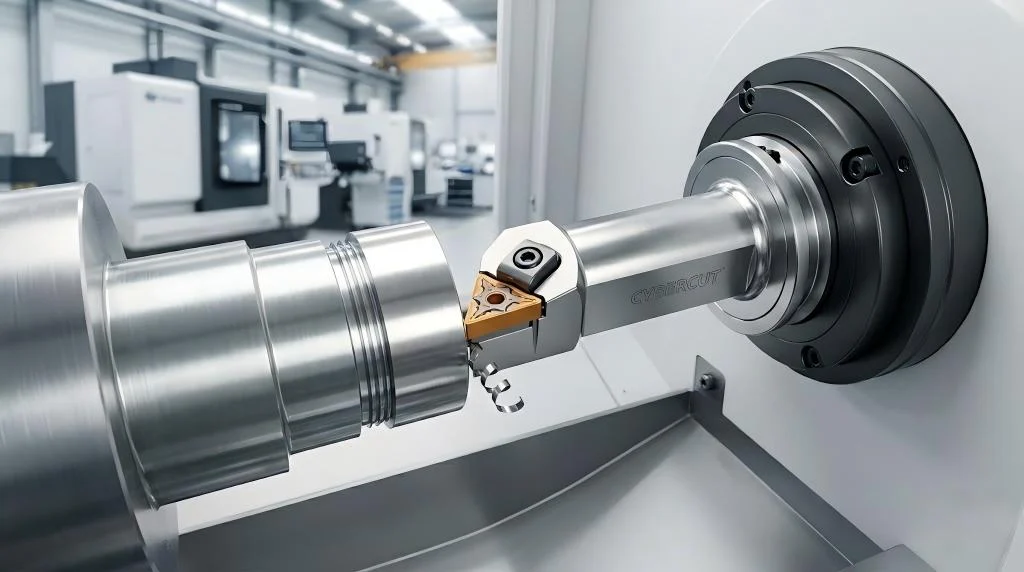
Indexable milling cutters consist of a reusable steel tool body featuring precisely machined pockets that hold replaceable carbide inserts. These inserts are typically secured via Torx screws or clamping wedges.
The Engineering Advantages
- Economic Modularity at Large Diameters: As the tool diameter increases, the cost of a solid carbide blank becomes astronomically high. For tool diameters exceeding 16mm (5/8″), indexable milling cutters become financially superior. You only pay for the working edge, not a massive cylindrical shank of expensive tungsten carbide.
- Versatility and Grade Swapping: A single indexable cutter body can machine aluminum in the morning and hardened steel in the afternoon. By simply swapping the inserts to a different carbide grade or coating, the tool is instantly repurposed. This modularity is closely aligned with the flexibility seen in carbide turning tools, where one holder accepts various insert geometries.
- High Feed Milling (HFM) Capabilities: Indexable tools are the undisputed champions of High Feed Milling. By utilizing inserts with a highly targeted lead angle (often 10° to 15°), the cutting forces are directed axially up into the machine spindle rather than radially, allowing for incredibly aggressive feed rates without tool deflection.
The Inherent Limitations
- Runout and Tolerance Stacking: An indexable tool is an assembly. The manufacturing tolerance of the steel body pocket, the clamping screw, and the insert all stack up. This creates a Total Indicator Reading (TIR) or “runout” that is physically impossible to eliminate entirely.
- Minimum Diameter Restrictions: Because the tool body requires physical space for insert pockets and clamping hardware, indexable milling cutters are generally impractical below 10mm (3/8″) in diameter.
- Effective Flute Density: Compared to solid tools, indexable cutters have fewer flutes per given diameter because of the hardware clearance required.
When to Choose Solid Carbide End Mills for High Precision

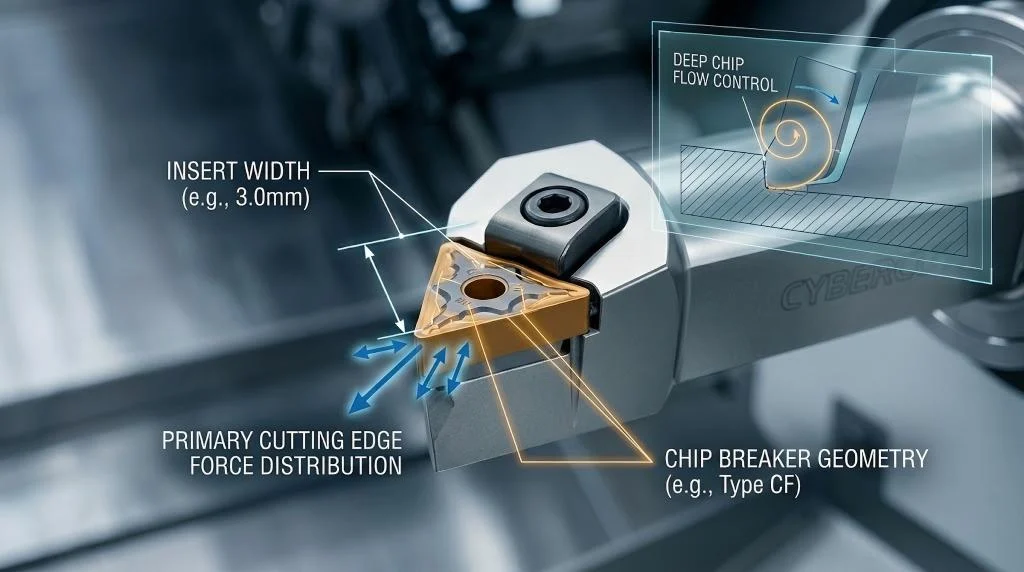
Solid carbide end mills are ground from a single, continuous cylindrical blank of cemented tungsten carbide. There are no moving parts, no screws, and no assembly required.
The Case for Solid Tooling
- Absolute Precision and Zero Runout: Because the flutes are ground directly onto the shank, solid carbide end mills offer near-zero runout. This allows operators to hit tolerances measured in the tenths of a thousandth of an inch and achieve mirror-like surface finishes.
- Micro-Machining and Intricate Geometries: For aerospace components, medical implants, or complex mold cavities requiring tool diameters down to 0.1mm, solid carbide is the only option.
- High-Efficiency Milling (HEM) and Trochoidal Toolpaths: Solid end mills excel in dynamic milling toolpaths. Because they feature a thick, rigid core and a high flute count, they can utilize a massive depth of cut combined with a light radial step-over, distributing heat evenly and extending tool life drastically.
However, once the tool wears out or chips, the entire end mill must be either discarded or sent out for regrinding and recoating, which introduces logistical downtime. This differs significantly from the instant replacement model used for indexable turning tools.
[Table] Cost-Per-Edge Analysis: Indexable vs. Solid Tooling
To truly determine which tool is “better,” manufacturing engineers rely on a Cost-Per-Edge (CPE) or Cost-Per-Part analysis. The following table provides a generalized financial breakdown comparing a 20mm Solid Carbide End Mill against a 20mm Indexable End Mill.
| Financial Metric | 20mm Solid Carbide End Mill | 20mm Indexable Milling Cutter (2 Inserts) |
| Initial Tooling Investment | ~$150.00 (Single Tool) | ~$250.00 (Body) + $30.00 (Inserts) = $280.00 |
| Usable Cutting Edges | 1 (Requires complete replacement or regrind) | 4 to 8 (Depending on geometry) |
| Cost of Tool Renewal | $150.00 (New End Mill) | $30.00 (New set of 2 inserts) |
| Cost Per Cutting Edge | $150.00 | $7.50 (Assuming 4 usable edges) |
| Machine Downtime for Changeout | 5-10 Minutes (Requires touching off Z-axis) | 1-2 Minutes (Index insert in machine) |
| Catastrophic Failure Risk | Scrap entire $150 tool | Scrap $30 inserts (Body usually survives) |
Conclusion: For diameters under 12mm, solid carbide is more economical. For diameters over 16mm, indexable milling cutters offer a dramatically lower long-term cost of ownership, similar to the economic principles governing lathe turning inserts.
Material Removal Rates (MRR) Comparison in Heavy Roughing
Material Removal Rate (MRR) is the ultimate metric of roughing efficiency. It measures how many cubic centimeters of metal your tool can remove per minute. The formula is: MRR = ap * ae * vf
Indexable Milling Cutters (The High Feed Approach):
Indexables dominate roughing on older or less rigid machines. By using a high-feed mill geometry, the axial depth is small, but the feed rate is pushed to extreme limits. If your machine shop also handles heavy rotational parts, ensuring your milling MRR matches your lathe output by upgrading your turning tool holders and inserts is vital for balanced production.
Solid Carbide End Mills (The HEM Approach):
Solid tools utilize High-Efficiency Milling (HEM). Here, the axial depth is massive, the radial step-over is very small, and the feed rate is fast. . This requires modern CNC controllers capable of computing complex toolpaths.
Best Practices for Extending Milling Tool Life
- Master Chip Thinning: When your radial engagement is less than 50% of the cutter diameter, the physical chip produced is thinner than the programmed feed per tooth. If you do not compensate by increasing the feed rate, the tool will rub the material, causing rapid heat buildup.
- Optimize Tool Holding: To maximize tool life, utilize shrink-fit tool holders or hydraulic chucks to guarantee maximum gripping force and minimal TIR.
- Re-evaluate Coolant Strategies: Thermal shock is the enemy of carbide. When milling steel with indexable milling cutters, flooding the tool with liquid coolant causes micro-cracking on the insert edge. Using high-pressure air blast to clear chips is vastly superior to liquid coolant, much like selecting the correct coolant strategy for CNC steel turning applications.
Frequently Asked Questions (FAQ)
Q1: At what diameter should I switch from solid carbide to indexable milling cutters?
A: The crossover point is generally around 16mm (5/8″). Below 12mm, solid carbide is standard. Above 16mm, the raw material cost of solid carbide makes indexable tools the financial winner.
Q2: Can I use indexable milling cutters for finishing passes?
A: They can be used with specific wiper geometries, but for absolute precision and mirror finishes, a solid carbide end mill will always outperform an indexable tool due to the lack of assembly runout.
Q3: What causes “chatter” when using long-reach solid carbide end mills?
A: Chatter is caused by a lack of rigidity. To prevent it, reduce the flute count, use a tool with a variable pitch design to break up harmonics, and reduce your radial depth of cut.
Q4: How does a “wiper” insert improve surface finish?
A: A wiper insert features a precisely ground flat section on its trailing edge that acts like a trowel, ironing out microscopic peaks. This allows operators to double feed rates while maintaining surface finish.
Q5: Is it worth regrinding solid carbide end mills?
A: Yes, it saves 40-60% of the cost. However, it reduces the tool’s outer diameter, requiring CAM programmers and CNC operators to update tool offsets to maintain accuracy.
Q6: Can the same carbide grades be used for both milling and turning?
A: While base substrates are similar, coatings differ. Milling requires toughness for interrupted cuts, while turning requires heat resistance for continuous cuts. For a complete setup, ensure your lathe uses dedicated turning category products.